The 8 Pillars of Positive Peace as a Roadmap for Building Stronger Nigerian Communities
By: Vol. Zenas Olanipekun
Ed 239 || 12.05.2026
About 28 people were killed, and several others were injured on the evening of Palm Sunday, March 29, 2026, when gunmen opened fire on residents in Angwan Rukuba, Jos North, Plateau State. The attackers fled into the night, leaving behind grief, fear, and another cycle of tension in the community. Yet, when the immediate gunfire stops and the curfew is eventually lifted, what remains is not true peace — only a fragile silence filled with distrust, pain, and the looming threat of retaliation.
The above is a painful reality of negative peace: the temporary absence of violence that fails to heal underlying wounds or prevent the next outbreak. Nigeria needs more than the absence of violence; it needs a clear roadmap to build strong, more cohesive communities. Peacepace Initiative’s work in leadership training, Peace Education, Community-based dialogues, and Peace-culture campaigns align with this framework.
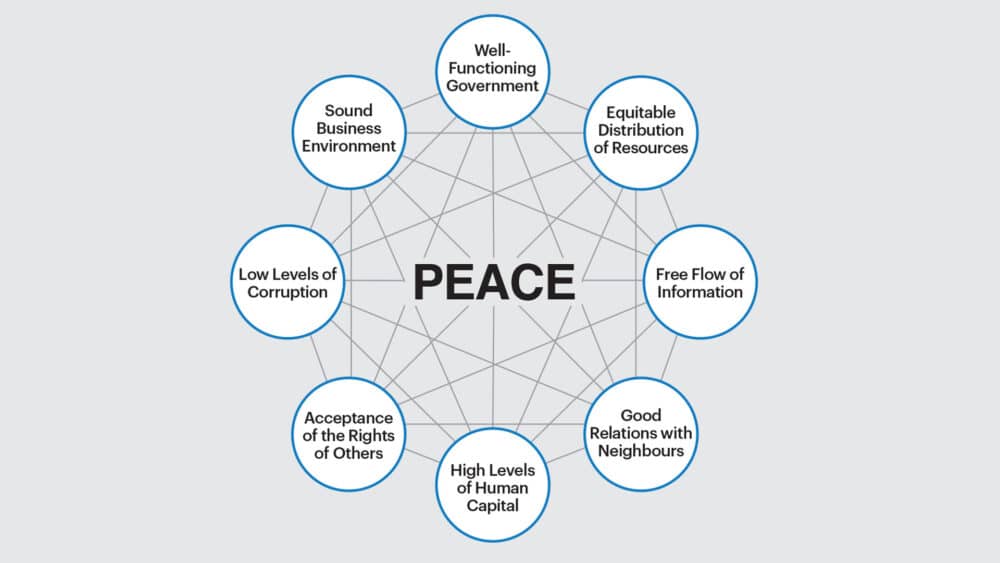
The Institute for Economics and Peace (IEP) offers a proven way forward through Positive Peace — the attitudes, institutions, and structures that create and sustain peaceful societies. At the heart of this framework are the Eight Pillars of Positive Peace, which serve as a practical roadmap for building stronger, more united Nigerian communities.
Negative Peace is defined by the absence of war and violence and does not capture a society’s tendencies towards stability and harmony.” Positive peace is “defined by a more lasting peace that is built on sustainable investments in economic development and institutions as well as societal attitudes that foster peace and can be used to gauge the resilience of a society, or its ability to absorb shocks without falling or relapsing into conflict.
Positive peace is not just idealistic; it is backed up by IEP research showing that stronger positive peace leads to higher GDP growth, better measures of wellbeing, higher levels of resilience and more harmonious societies. Also, there’s the Positive Peace Index (PPI) that measures the level of Positive Peace in a country. This data can be used to quantify global peacefulness and help to understand the factors that create peace in a society
Positive peace works as a system, and the pillars are interdependent and mutually reinforcing. A weakness in one often affects the others. These pillars create an environment where human potential can flourish, moving beyond just the absence of violence.
The 8 Pillars of Peace
Well-functioning Government
This pillar refers to governments that are effective, transparent, and responsive to citizens’ needs. When leaders deliver services fairly and listen to the people, trust grows, and conflict risks fall. In Nigeria, weak governance often fuels frustration and insecurity, as seen in many communities.
Sound Business Environment
A stable economy with opportunities for jobs and entrepreneurship reduces desperation that can lead to conflict. When young people can start businesses or find meaningful work, communities become more stable, and the idle hands will refuse to be the devil’s workshop.
Also Read: Beyond Bullets: How Local Leaders Hold the Key to Lasting Peace in Northern Nigeria.
Equitable Distribution of Resources
Fair access to education, healthcare, land, and basic services prevents feelings of marginalisation. Inequality between groups or regions often deepens divisions. Addressing resource gaps — especially in education and opportunities for young Nigerians — helps build a sense of belonging and fairness.
Acceptance of the Rights of Others
This pillar involves respecting different ethnic, religious, and cultural groups and protecting everyone’s fundamental rights. In a diverse country like Nigeria, embracing inclusion and tolerance instead of suspicion and hatred strengthens social bonds.
Good Relations with Neighbours
Peaceful interactions between communities, ethnic groups, and even countries reduce the chance of conflict. Simple acts of dialogue, community service, and cultural exchange build trust.
Free Flow of Information
When accurate information flows freely through independent media, education, and open discussion, people make better decisions, and misinformation loses power. Countering rumours that often fuel violence is vital for calm and understanding.
High Levels of Human Capital
Investing in education, skills, and health creates capable, empowered citizens. Educated and skilled youth are better equipped to solve problems peacefully and contribute positively. Peacepace Initiative’s focus on peace education directly supports this pillar by equipping young Nigerians with the knowledge and mindset for positive change.
Low Levels of Corruption
When corruption is minimised, resources reach the people who need them and public trust increases. Corruption erodes confidence in institutions and can worsen inequality. Fighting graft through transparency and youth involvement helps create fairer systems that support lasting peace.
The beauty of the Positive Peace framework is that it does not require waiting for perfect national solutions. Communities and young people can begin applying these pillars at the local level today. By focusing on these eight areas, we can move from managing conflict to genuinely building stronger, united communities where peace becomes the natural state.
Peacepace Initiative is already playing a vital role in translating the Eight Pillars of Positive Peace into action across Nigeria. As a youth-led organisation focused on peace education, conflict resolution, justice, and unity, Peacepace directly contributes to several key pillars through its programmes, volunteer and ambassador network.
Through peace education workshops and school-based training, Peacepace builds High Levels of Human Capital by equipping young Nigerians with the knowledge, skills, and mindset needed to become peacebuilders rather than victims of conflict. These programmes help young people develop critical thinking, empathy, and leadership abilities that strengthen their communities from within.
Additionally, its advocacy for justice and accountability supports Well-functioning Government and Low Levels of Corruption by empowering young people to demand transparency and good governance.
The tragic events in Jos remind us that the silence after violence is not enough. Negative peace may stop the guns for a while, but only Positive Peace — built on the Eight Pillars — can create the stronger, more united communities Nigeria truly needs.
Nigeria’s young people hold the greatest potential to drive this positive change. When we invest in education, dialogue, inclusion, and accountability, we do not just manage conflict — we build the foundations for lasting harmony and prosperity.
Image Credit: Institute for Economics and Peace (IEP) / Vision of Humanity.
Facebook: Peacepace Initiative
LinkedIn: Peacepace Initiative
X:@PeacepaceNG
Instagram: peacepace_initiative