Deepfakes, Synthetic Media and Election Integrity in Africa
By Amb. Joshua Fagbemi
Ed: 243 || 16.09.2026
Six African countries – Nigeria, Kenya, Angola, The Gambia, Equatorial Guinea, and the Republic of the Congo – will head to the polls in 2027, and the continent faces its most technologically complex electoral cycle to date. It comes at a time when advanced technology is now used to manipulate ideas and campaigns, and fuel misinformation to gain public favour.
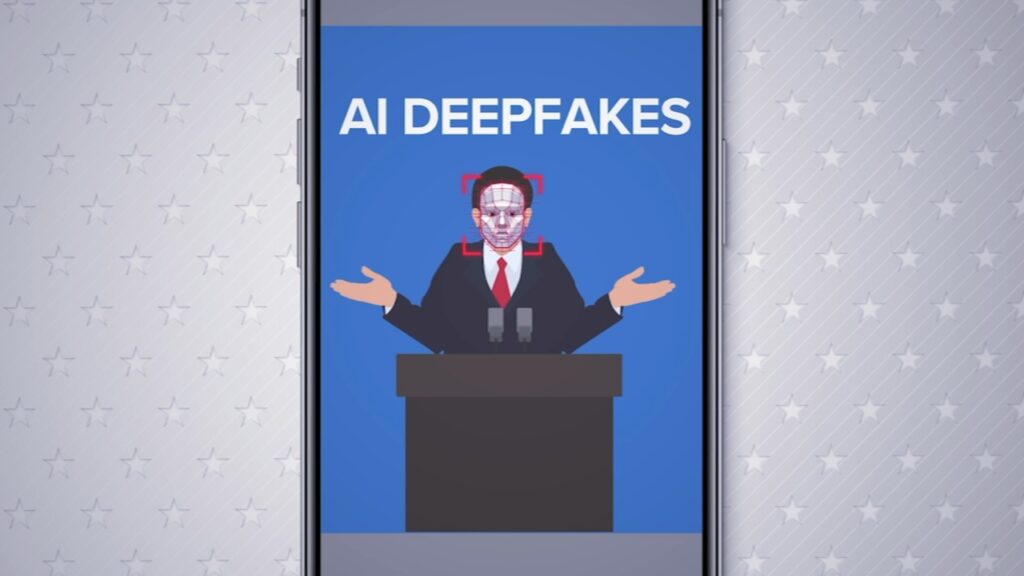
It’s famously known that African elections are already marked by recurring tension over transparency, mistrust and disinformation. However, they could soon be entering a new era: that of deepfakes. This video and audio content generated by artificial intelligence (AI) is capable of imitating a person’s voice, gestures and face, posing a threat to shift the boundaries of political manipulation.
Deepfake content grew by 550% between 2019 and 2023, according to a January 2025 report by Deloitte. AI tools that once required specialist knowledge can be used by anyone who has a mobile device or PC. Such a person can now produce convincing synthetic video and audio in minutes. This makes the upcoming political battlefield as being quietly remapped.
Before the election bells ring in January 2027, Nigeria is already living through the experience of synthetic media and deepfakes. And these are warning signs for what is to become of us.
In June 2025, a deepfake video in broadcast news format emerged showing Nigerian military men guarding cattle in VIP fashion in Yelwata, Benue State. The video circulated just days after an overnight attack in the same town left over 100 people dead. It was later debunked as a fabricated image that seeks to increase the flames of the already deadly conflict in that community.
There’s another.
Also in June 2025, an AI-generated clip of US President Donald Trump, supposedly speaking about Nigerian national life, oil, and the military, was shared on TikTok. It garnered over 421,500 views.
In a country where 157.7 million out of 195.1 million telecom subscribers are online, the social media space is the best platform to run any form of propaganda. A study by Afro Barometer shows that 62% of Nigerians access their political news through social media. The situation becomes alarming when this fake content is forwarded as far as possible on WhatsApp or reposted on Facebook and X (formerly Twitter).
Away from Nigeria.
Kenya is in the same plight. As the country also heads to the polls in 2027, AI and deepfakes are on the rise to draw or steal attention. Researchers at Trust Lab, an EU-funded project, identified 17 major coordinated disinformation campaigns operating in Kenya in 2025. In this regard, deepfake videos and forged documents were deployed to inflame ethnic divisions, particularly targeting the Kikuyu community.
Several fabrications sought to divert attention using fake technical notes to get voters’ attention.
There is also evidence in Ghana.
When the formerly known as Gold Coast country went to the polls in 2024, the scenario revealed how AI-driven disinformation intersects with electoral instability. During the period, bot networks, manipulated media, and deepfake content were all deployed to fund narratives during the campaign season.
Also Read: The Role of Vigilante Groups in Community Policing as a Strategy for Security Enhancement.
Fire on the mountain
Over 670 million Africans are now online, with a large percentage as young people. Good news. But WhatsApp, Facebook and TikTok have become the main sources of political information. In this context, several factors increase people’s vulnerability to deepfakes.
- Africans lack a good fact-checking culture, where many users share content without verifying its source.
- Messages and videos circulate quickly in closed groups and are difficult to monitor.
- Politicians know public confidence is fragile, which is why they try to manipulate and gain the limelight as early as possible. This fuels the spread of propaganda and false information.
Deepfakes are threatening day-by-day. Unlike traditional “fake news”, deepfakes draw their strength from the mix of image and sound, creating a sensory illusion that is difficult to contest. Their effectiveness lies not only in their ability to deceive, but also in their power to symbolically destabilise.
The act of creating a scandal around a candidate is directed at amplifying ethnic or religious divisions and sowing confusion. It’s a deep crisis, an erosion of truth, and a loss of genuine communication that undermines African democracies that already face precarious balances around their institutions.
While several countering tools are emerging, with Google, Meta and Microsoft developing tools capable of identifying artificial content, these detection technologies are still expensive and rarely accessible to the African media.
The best bet is for NGOs and other Civil networks to train people of all ages to identify, check, and question content is a strategic investment for democracy. Also, university curricula and media education are long-term levers; education administrators must incorporate digital and media literacy as civic skills.
Technology is a welcome development that can change our lives positively. But beyond technology, Africa must protect the integrity of its democratic choices that are at stake.
Also Read: The Human Cost of US-Israeli War against Iran: Why Peace Should Be the Ultimate Goal.
Featured Image Credit: ABC7 Chicago
Facebook: Peacepace Initiative
LinkedIn: Peacepace Initiative
X:@PeacepaceNG
Instagram: peacepace_initiative