Beyond Bullets: How Local Leaders Hold the Key to Lasting Peace in Northern Nigeria
By Amb Daniel Adeola
Ed. 238 || 20.04.2026
For a region characterised by persistent conflict, it wouldn’t be an exaggeration to depict the Northern Nigerian geographical area with violence.
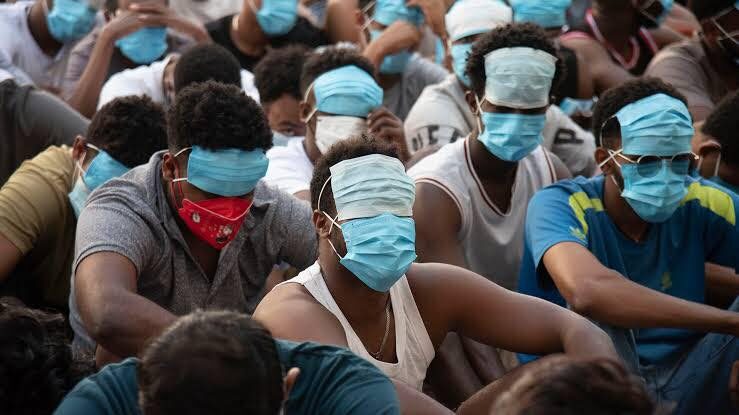
Over a decade now, armed groups such as Boko Haram, Bandits and unnamed gunmen have been assaulting communities in this region, destroying villages, setting fire to houses and displacing millions of people. The International Organisation for Migration’s Displacement Tracking Matrix revealed that by the end of 2024, more than 2.2 million people remained internally displaced in the North East alone (IOM, 2024).
In response to the threats and killings, authorities deployed, and are still deploying, soldiers, police and other security forces for counterattack and a peacekeeping mission. Also, International organisations have made (and are still making) great efforts to ensure that people do not join these armed groups.
But here is the uncomfortable truth: most of these efforts are not yielding a lasting peace. Why? Because they missed something important.
The missing piece is not more weapons or bigger armies. It is trust. Soldiers arriving from a different part of the country do not know who lives on a particular street, which families have an old argument, or which young man has been acting strangely for weeks. They cannot read the quiet signals that a community sends when something is wrong. But there are people who can, and they have been there all along. They forgot the people who already understood how to hold communities together way before the onset of this violence.
How local leaders come in
Local leaders play a critical role in the coordination of a community. Not only do they bring the community’s needs to the closest authorities’ awareness, but they also ensure the security of people in such a location.
For more clarification, consider your own neighbourhood. Suppose two families were involved in a headlong dispute, to whom would you have trusted to adjudicate a fair dispute? Probably, this is not a person who does not live in the city and has never seen either of the families. You would want someone local. Someone respected. An individual who has lived there long enough and knows everybody there.
It is precisely what the village elders, the traditional rulers and community councils do in Northern Nigeria. They have been resolving conflicts, applying rules in the community and preserving social trust for generations. These leaders are not merely representatives of the past, even in the emirate system of the far north, or councils of elders in the farming villages. They are active problem-solvers.
“Local leaders know something no soldier can easily learn: who lives next door, who is struggling, and who might be in danger.”
This is local knowledge that goes beyond that. Studies have narrowed down five viable ways in which these local institutions can help in bringing peace, and when all five are combined, we see how profound this provision is.
The first is community intelligence. As old people and local communities reside among the people, they are able to spot warning signs of trouble early, often long before any official security force would notice anything unusual.
The second is dispute resolution. When farmers and cattle herders fight over the right to land and water, a respected elder can bring them both to the ground and conduct negotiations towards a deal that is really accepted by both parties. Such a resolution is commonly quicker and much more long-lasting than a court battle, which may last years and make one party feel cheated.
Third, it is these local institutions that put back what had been broken when families eventually came home after being displaced by violence. Traditional reintegration ceremonies and community rituals help returning people feel that they belong again, restoring the social trust that violence destroyed. Such healing cannot be made through a government programme.
Fourth, and possibly the most ignored, women’s networks play a quietly powerful role. As women pass through markets, homes and religious spaces, they relay information across societies, which male authorities cannot possibly reach. In documented cases across Borno and Adamawa States, it was women’s informal networks that first raised the alarm before Boko Haram attacks, intelligence that saved lives even though those women received no formal credit for it.
Fifth, the presence of youth vigilante organisations such as the Civilian Joint Task Force has safeguarded neighbourhoods. They would probably be able to spot an outsider, which could easily be missed by a soldier. Put together, they create a chain of defence of the community, and it cannot be duplicated by any external force.
Also Read: 9 years of Peace-driven Impacts: An Appraisal of Peacepace Initiatives.
Way forward
All five peacekeeping methods do not imply that traditional institutions are faultless. There are elders who are politically controlled. There are community groups of youths who have committed abuses when left without proper oversight. Women peacemakers have been threatened and received no reward for their courage. This is the reality of the issues, which should be approached with honesty.
The solution, however, does not lie in marginalising local leadership and continuing to use external solutions which have failed miserably within the last ten years. The answer is to properly support, fund, and hold accountable the community structures that are already doing the work. The strategies of national peace should formally involve traditional leaders. Women mediators must not be praised but formally recognised. Youth groups need proper rules, oversight, and pay so they do not become the next problem.
Peace is not about cessation of bullets. It is about rebuilding trust, community by community. And the people who know how to do that have been right there all along; it is time for us to leverage them and build a lasting peace.
Image Credit: The Guardian, Nigeria
Facebook: Peacepace Initiative
LinkedIn: Peacepace Initiative
X:@PeacepaceNG
Instagram: peacepace_initiative