Should Nigeria ban Social Media Usage for Under-16s?
By Vol. Zenas Olanipekun
Ed: 235 || 23.02.2026
Picture this: a 14-year-old girl scrolls social media platform TikTok at midnight, laughing at viral dances until a stranger’s message turns into relentless harassment that leaves her paralysed with anxiety. This fictional, yet frightening experience reflects grim statistics: a 2025 GSM Association (GSMA) report revealed that 50% of Nigerian children exploring the online space suffer from online bullying and harassment.
Separately, Gatefield’s 2025 State of Online Harms report paints a more stark picture: of the 137.8 million Nigerian children active digitally, 90% encounter at least one cyber risk.
The issue continues to raise public debate and action.
In late 2025, Senior Advocate of Nigeria Femi Falana made a bold plea, calling for “Restrict social media access for under-16s now.” While echoing the global momentum, including Australia’s pioneering nationwide ban on platforms like TikTok, Instagram, Facebook, YouTube, and X for under-16s (effective December 2025, with platforms facing heavy fines for non-compliance), Falana warned that Nigeria must act proactively to protect young minds from cyberbullying, grooming, addiction, and harmful content.
Other nations, such as France, are following suit due to increasing concerns over mental health and the exploitation of teenagers.
Now, the question hits home: Should Nigeria follow with a full ban, or risk leaving its young ones exposed in the digital world? And in the process, jeopardise social media’s role in education, creativity, and opportunity in a country where smartphones are lifelines.
While there’s no current law in Nigeria banning or strictly restricting social media for minors under 16, the Nigerian Data Protection Act 2020 offers some protections around children’s data and online safety. Also, the Child Rights Act addresses exploitation (including online).
However, these laws don’t enforce an age ban or mandatory verification like that of Australia’s social media age-restriction law, enacted in December 2025.
The drive for a ban is a vital response to the alarming rise in online harms. The primary case for a ban rests on restoring adolescent well-being and promoting physical interaction. What the law will do is place children offline to interact with their immediate environment instead of suffering from screen addiction. The ban also protects children’s mental health.
Evidence links heavy social media usage in early teenage years to anxiety, depression, amongst others. For instance, a study by the Child Mind Institute (USA) claimed there’s a link between social media and depression. Other related studies posit that teenage and young adult users who spend the most time on Instagram, Facebook and other platforms were shown to have a substantially (from 13 to 66%) higher rate of reported depression than those who spent the least time.
Also Read: The Nigerian Digital Space: Using Social Media for Social Change.
The mixed bags
While the momentum for a ban is justifiable given the risks, a blanket ban could lead to a significant loss of the internet’s benefits, fundamentally disrupting opportunities for the next generation.
There is no doubt that the world is increasingly defined by technology, and social media offers critical access to education, creativity, global exposure, and essential skill-building. Many Nigerian teens rely on platforms like YouTube for tutorials and assignments, and specialised Facebook groups for academic support, often employed by teachers to compensate for resource-poor classrooms. So banning social media access might mean cutting off this educational artery.
More crucially, the ban risks severing the economic lifeline that digital platforms provide in a developing economy. Unlike in wealthier nations, social media in Nigeria is not just for entertainment; it is an economic launchpad. Many teenagers engage in learning skills like graphics design or content writing, which can generate income for them sooner or later. A ban would disproportionately affect these financially vulnerable youths, restricting their ability to build early skills, gain financial literacy, and contribute to their household income, making the policy feel overly restrictive and unrealistic without addressing broader issues like poverty.
However, should Nigeria still ban social media?
This is Nigeria, not Australia. Nigeria’s context is different from that of other wealthier nations. In Nigeria, digital platforms are key to opportunity, and outright bans could seem unrealistic or overly restrictive without addressing broader issues like poverty or education access. Banning the internet does not seem like a complete fix.
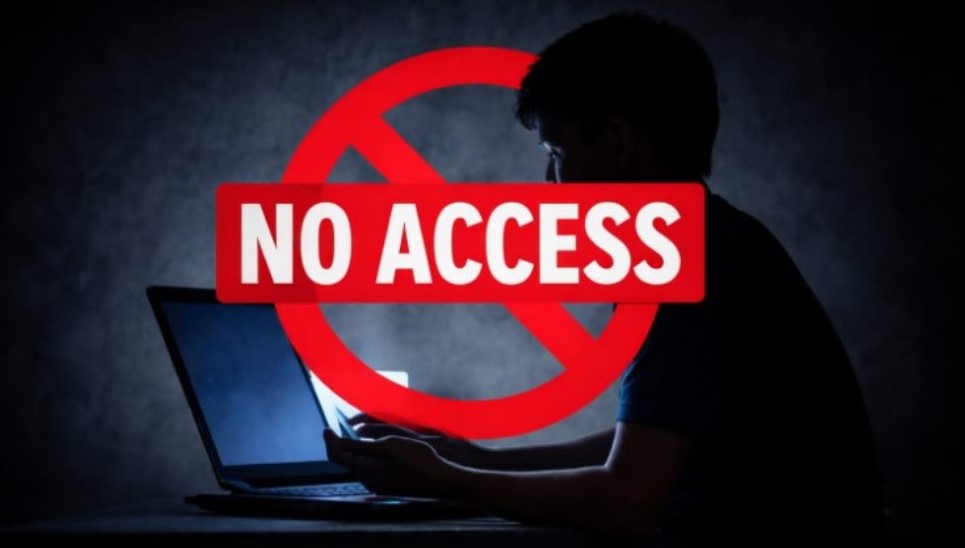
In addition, Nigeria faces enforcement difficulties when it comes to issues like this. An example is when the government suspended Twitter on June 5, 2021. Any blanket ban on the use of social media for under-16s would immediately face the same enforceability challenge witnessed during the 2021 Twitter suspension, where widespread VPN adoption rendered the government’s restriction largely ineffective. Applying this to a ban on minors would simply push their activity into less-monitored private networks.
In conclusion, placing a ban on the use of the internet is not the best plan and path to safeguard Nigerian’s under 16’s interest. The risks are real and well acknowledged, but a blanket ban risks being ineffective, unenforceable and overly paternalistic in a country where social media doubles as an economic and educational lifeline.
A full ban is tempting but flawed. The path forward lies in robust digital literacy education, equipping Nigerian youth to navigate online spaces safely, paired with smarter regulation and filtering content. These address the risks without destroying their educational access.
Image Credit: AI-generated
———————————————-
Facebook: Peacepace Initiative
LinkedIn: Peacepace Initiative
X:@PeacepaceNG
Instagram: peacepace_initiative