An Overview of the State of Insecurity in Nigeria in early 2026
By Vol. Ali FAHD
Ed: 233 || 20.01.2026
Nigeria enters 2026 at a defining crossroads. The government’s latest budget has signalled a robust approach, allocating ₦5.41 trillion to defence and security, the highest in the nation’s history. But as the first week of January 2026 has already shown, spending billions on ammunition is not the same as securing the streets. While the Naira has shown some signs of stabilising at around ₦1,400 to ₦1,450 per dollar, the security tax paid by everyday Nigerians in the rural corridors remains high. We are seeing a nation of cleared but not held territories, where military wins are almost immediately met with brutal retaliation from armed groups.
The biggest shift in the security landscape over the last few months has been the America First recalibration of US-Nigeria relations.
Following a series of sharp warnings from the Trump administration regarding the “prosecution of Christians” and the subsequent gutting of traditional USAID development programs, the focus has pivoted almost entirely to aggressive, kinetic counterterrorism. This has led Nigeria’s President, Bola Ahmed Tinubu, to declare a national security emergency, ordering the recruitment of more security personnel alongside other far-reaching measures.
The Christmas Day Precedent is the most vivid example. On December 25, 2025, the US, with the Nigerian military’s approval, conducted sixteen precision strikes using Reaper drones and, reportedly, Tomahawk missiles on Lakurawa and ISSP camps in Tangaza, Sokoto State. It was a massive escalation. While the strikes took out high-value targets, the blowback was nearly instant.
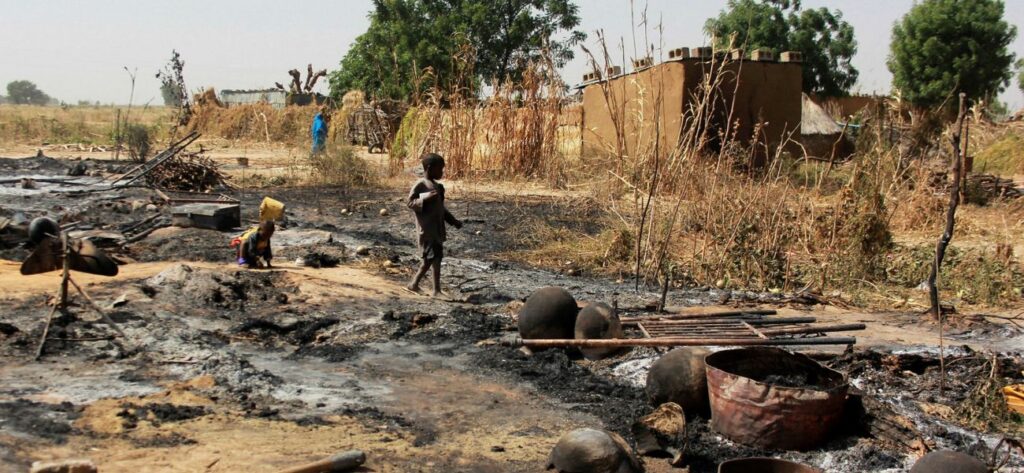
By January 3, 2026, a retaliatory raid in Borgu, Niger State, left 42 people dead. Just days later, on January 5, a landmine in Borno killed nine Nigerian soldiers. It’s a cycle: high-tech strikes from above followed by low-tech, high-casualty vengeance on the ground.
The Kidnapping Industry and Rural Fragility
Beyond the ideological wars, Nigeria’s Northwest is being consumed by a kidnapping economy that has evolved into a full-fledged industry. According to SBM Intelligence data in late 2025, kidnappers extorted at least ₦2.57 billion in ransom in a single year. These groups are no longer opportunistic criminals seeking quick payouts; they operate as decentralised enterprises with defined roles, intelligence networks, and territorial reach.
Furthermore, the scale and organisation of this economy were starkly illustrated in the first three days of January 2026 alone, when 15 teenage girls were abducted in Zamfara State. This reality exposes a fundamental asymmetry. While the Air Force can bomb suspected camps deep in the forest, it cannot protect a girl walking to school in a remote village. Banditry has thus mutated into a low-visibility franchise, thriving precisely in the spaces where the state’s presence is thin or absent.
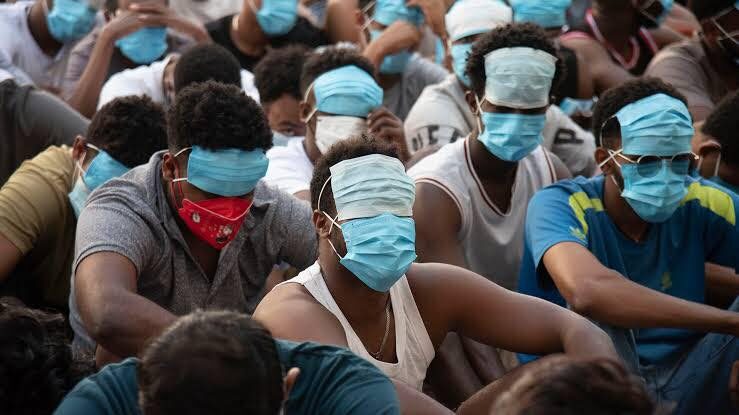
The fragility of rural security infrastructure is further underscored by repeated intelligence and response failures. On 18 November, armed bandits abducted more than two dozen students in Kebbi State. Multiple accounts, including statements from the state governor, indicate that the Department of State Services (DSS) had shared intelligence about the planned attack with state authorities and other security agencies. Although army personnel were deployed, they later withdrew, creating a security vacuum that the abductors exploited just 30 minutes later. The incident illustrates not a lack of information but a breakdown in coordination, endurance, and local protection.
This pattern repeated itself on an even larger scale just three days later.
On 21 November, Nigeria witnessed its worst mass abduction since 2020, when gunmen kidnapped over 300 students and staff from St. Mary’s School in Niger State. Before the attack, families reportedly raised alarms and appealed to the police, military, and civil defence corps for protection, citing fears of imminent abduction. Combined with the redeployment of security personnel in Kebbi, these warnings suggest a system stretched beyond capacity, where forces are shuffled reactively, leaving schools and rural communities exposed.
Taken together, these incidents reveal that kidnapping in the Northwest is not merely a security problem but a structural one.
An entrenched ransom economy, weak rural governance, and overstretched security forces have created a permissive environment in which abductions are both predictable and preventable, yet repeatedly allowed to occur. As long as protection remains episodic and state presence intermittent, the kidnapping industry will continue to adapt, expand, and prey on the most vulnerable.
The Hunger Nexus
The most alarming statistic for 2026 is not the body count, but the hunger count. The UN World Food Programme (WFP) projects that 35 million Nigerians will face severe hunger this year. This is not a drought-induced crisis; it is a security-driven famine.
In the Middle Belt, Nigeria’s primary food basket, agriculture is increasingly governed by violence. Farmers in states such as Benue and Plateau are subjected to what can only be described as terrorist taxation: to plant, harvest, or transport yams and grains, they must pay armed groups for permission to survive.
In 2025, the figure stood at 33 million. The trajectory is unmistakable. When farmers are killed, displaced, or forced into IDP camps, the consequences travel far beyond rural communities. Food prices in Lagos and Abuja surge, regardless of Central Bank assurances on inflation control. Hunger, in this context, is no longer merely an economic indicator; it is a byproduct of insecurity, weaponised through the disruption of food systems.
Conclusion
The state of insecurity in early 2026 proves that you can buy temporary silence with massive budgets and foreign missiles, but you can’t buy peace. The current strategy is heavy on fire and light on governance. We are clearing forests but leaving them empty, only for the same groups to return once the drones go back to base.
Nigeria’s path to a real recovery this year depends on moving past the kinetic-only mindset. Military strikes might win a news cycle, but only community-led intelligence, security, and a visible government presence in rural areas can win the war.
Peace in 2026 won’t be measured by how many missiles we fire, but by whether a farmer in Niger State can plant his seeds without wondering if his family will be alive to see the harvest.
Image Credit: Policy and Legal Advocacy Centre
———————————————-
Facebook: Peacepace Initiative
LinkedIn: Peacepace Initiative
X:@PeacepaceNG
Instagram: peacepace_initiative