Inside Nigeria’s Quest for Equal Access to Education: Bridging the Gap
By Amb. Joshua Fagbemi
Ed: 234 || 09/02/2026
It’s now 2026, and the world continues to undergo significant changes in daily life. Over the last decade, several developments, driven by new trends, technology, and the need for scalability, have remodelled the implementation of various policies using innovative techniques.
Notably, Nigeria is a recipient of this ongoing yet rapid transformation, further fueled by the adjustment witnessed in post-COVID. Gone are the days when cash is a determinant of transaction; digital payment, with the evolution of fintech, has birthed instant payment. Deliveries have been placed in another dimension with a few taps from one’s comfort zone, getting you what you want within minutes.
Government interplays coupled with acts by entrepreneurs and innovators form a major part in this advancement, with the introduction of initiatives that align with global trends. It’s an evolution that is still in process, and that process will be infinite considering the growing momentum of emerging technologies.
However, Nigeria is still falling behind amid the enforced and needed transformations. While insecurity has been the greatest enemy of the country in recent years, the real enemy is evident and well-known by all.
Continued education gap in Nigeria
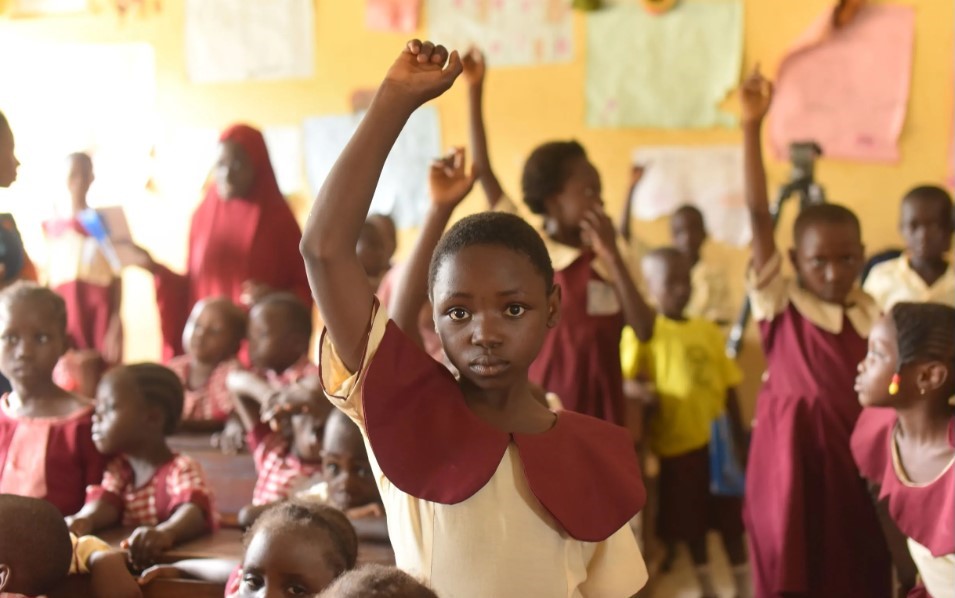
The education gap still plagues the most populous black country in the world. According to a 2023 report by the United Nations Children’s Fund (UNICEF), about 10.5 million of Nigeria’s children aged 5-14 years are not in school. Only 61% of 6-11-year-olds regularly attend primary school, and only 35.6% of children aged 36-59 months receive early childhood education.
The scenario looks more disappointing in the Northern part of the country, with an attendance rate of 53%. The figure reflects the continued trend that getting out-of-school children back into education poses a massive challenge in Nigeria.
A year later, UNICEF stated that Nigeria has 18.3 million out-of-school children, the highest number globally as of late 2024. More concerning is the regional distribution, with 45% in the North-West and 28% in the North-East. This means that 73% of Nigeria’s education crisis is concentrated in northern states, no thanks to terrorism, conflicts, and insecurity.
Although primary education is free in Nigeria, factors such as parent illiteracy, farming lifestyle, insecurity, poor background and orientation have been a leading cause. A 2024 report noted that children in Nigeria’s rural and remote areas face more difficulties accessing education than their urban counterparts due to fewer schools and longer travel distances.
Underfunding is another leading cause. The annual national budget allocation for education still falls short of the 26% recommended by UNESCO.
In the 2025 federal budget proposal, the federal government allocated ₦3.52 trillion to the education sector. While this represents a significant increase from the ₦1.54 trillion allocated in 2023 and ₦2.18 trillion in 2024, it represents approximately 7.3% to 7.5% of the total 2025 budget.
For the 2026 budget proposal presented to the National Assembly, education maintained the ₦3.52 trillion allocation. However, this accounts for approximately 6.1% of the total budget, a fall from the 7.5% of the prior year.
The lack of funding significantly affects all aspects of the educational system, from infrastructural development to innovation, teacher salaries, and promotion. Funding is a core determinant to the extent that no education sector can develop beyond its quality of education without proper funding.
Also Read: An Overview of the State of Insecurity in Nigeria in early 2026
Priorities over education funding
Amid the underfunding that has plagued the nation’s education sector, what’s more alarming is how governments have often prioritised other agendas not considered ‘essentials’ compared to education.
For instance, a 2026 analysis by PunchNews shows that the Kebbi State government allocated ₦10 billion in December 2025 to subsidise 1,300 Hajj pilgrimage seats for 2026, approximately ₦7.6 million per pilgrim. The, as stated in the report, represent 59% of Kebbi’s total 2024 revenue and over 71% of its internally generated revenue for the first nine months of 2025.
Another is Kano State, where the government, in the 2025 budget, allocated ₦2.5 billion for quarterly mass weddings, alongside N8 billion for Ramadan feeding programmes and nearly N1 billion for religious surveys and welfare.
These are states where out-of-school children are on the rise amid a poor state of both primary and secondary education. It shows the continued downgrade of education and how governments divert resources to less essential agendas.
Call to action
For this context, it’s a reflection of education’s continued fight for survival in Nigeria. It shows that while education demands more, it has been met with little. It’s a testament to how Nigeria’s weak system and corrupt practices continue to affect the nation’s future.
The Nigerian education crisis again raises an urgent call for attention. It’s high time the Nigerian government stopped substituting religious appeasement for social investment and using this as a bait to secure another tenure. States should adhere to the UNESCO benchmark and allocate at least 20% of the budget to education.
Education funding is a vital part of Nigeria’s human capital development. For a peaceful and flourishing country we all desire, educational funding holds a defining key to its prosperity.
Also Read: Nigerian Federal Roads Are Now Death Traps: A Call for Responsible Governance
Image Credit: Brookings Institute
———————————————-
Facebook: Peacepace Initiative
LinkedIn: Peacepace Initiative
X:@PeacepaceNG
Instagram: peacepace_initiative