Deploying Technology and AI Initiatives to solve Nigeria’s Insecurity Issues
By Amb. Joshua Fagbemi
Ed. 236 || 09.03.2026
It’s no gainsaying that Nigeria’s insecurity issues have become an everyday news item. In fact, when such news appears on our news feed, we sympathise, scroll, and forget. The frequency of its appearance has made our minds process such occurrences as everyday news, such as fund embezzlement.
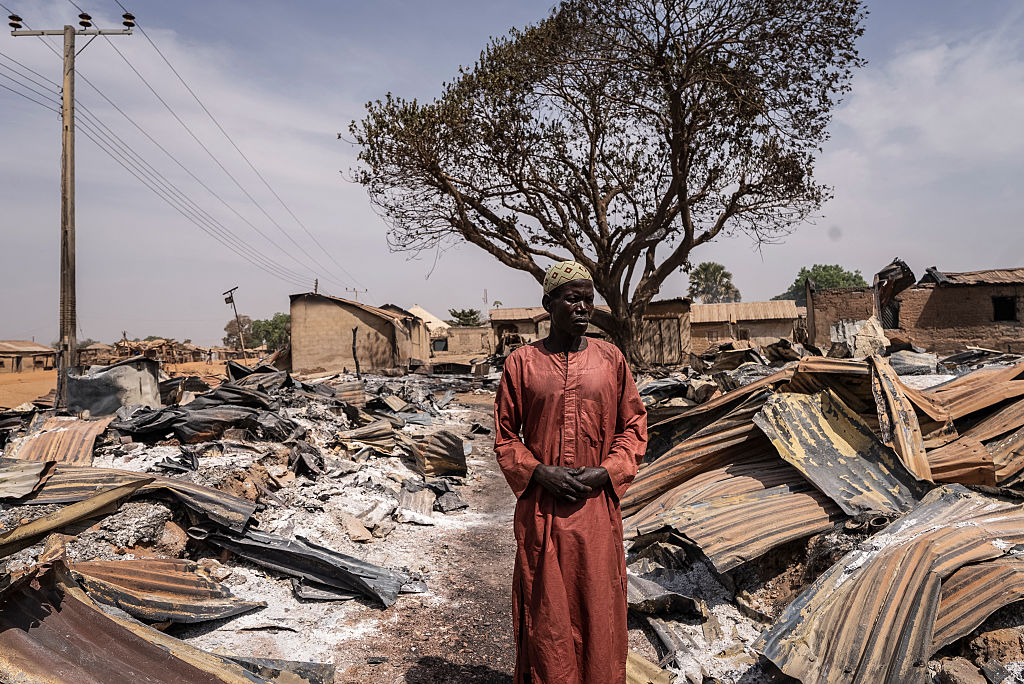
President Tinubu’s declaration of national emergency on security on November 26 is another reflection of the doom and crisis facing the country. While the pronouncement is long overdue, it reflects how Nigerians (especially the Northerners) have been forced to sleep with one eye, lose their houses, and, in extreme cases, give up their lives amid insecurity.
Consistent kidnappings and deadly attacks in Kebbi and Niger State, and attacks in Borno, Zamfara, Yobe, Plateau and Kwara are a stark example of how Nigeria’s security system has been utterly ridiculed.
And figures reveal a disturbing yet harsh truth.
Between July 2023 and June 2024 alone, SBM Intelligence, an Africa-centric security analysis and strategic consulting firm, revealed that about 7,568 people were kidnapped in 1,130 cases across the country. During this period, the kidnappers demanded nearly N11 billion ($8 million) as ransom and received N1 billion ($0.72 million).
Meanwhile, the life for money transaction occurs despite the Nigerian senate outlawing ransom payments to kidnappers in 2022 and making abduction punishable by death.
Well, the above are insecurity cases from two to three years ago. Let’s explore recent data.
In November 2025, successive abduction incidents shook the entire nation. On 17 November, gunmen abducted 25 female students from the Government Girls Comprehensive Secondary School in Maga, Kebbi State. During the attack, the group shot and killed the school’s vice principal and left another staff member with gunshot wounds.
The next day, assailants attacked the Christ Apostolic Church in Eruku, Kwara State, killing at least two worshippers and abducting 38 others. On 21 November 2025, 315 students and staff were abducted from St. Mary’s Catholic Primary and Secondary Schools in Papiri, Niger State, surpassing the 276 abducted during the infamous Chibok mass abduction of 2014.
Also Read: An Overview of the State of Insecurity in Nigeria in early 2026
These attacks raise alarm over the efficiency of the Nigerian security system. It raises questions about the capability of their “various” deployed initiatives to combat terrorism and all other core security issues.
Along these lines of insecurity, the U.S. President Donald Trump tagged Nigeria as a Country of Particular Concern (CPC) over claims of Christian Genocide, especially in the Northern part of the country.
Regardless of that claim, what remains vivid is that innocent lives are being wasted in Nigeria daily, and this is a great concern!
Several moves were made to erase the claim. For instance, the United States military conducted airstrikes against Islamic State (IS) targets in northwest Nigeria on December 25 and 26, 2025. Ordered by President Trump, in partnership with the federal government, the strike targeted Islamic State-West Africa Province (ISWAP/ISIS) camps in the Bauni forest in Tangaza, Sokoto State.
Also, General Christopher Musa (retd.) was appointed as the new Minister of Defence, succeeding Muhammad Badaru Abubakar, who resigned from the position on December 1, 2025, citing health reasons. The change was rumoured to be related to the worsening case of the nation’s insecurity issue.
The aftermath of these: killings, strikes and kidnappings persist.
On January 18, 2026, gunmen abducted 163 Christians from two churches in Kaduna State. IS terrorists levelled the Kwara State community in a February 3 attack. The killing of a traditional ruler in Ebonyi State on March 1, 2026, and many more.

According to the Vanguards, over 1,250 people were killed due to violence between January 1 and February 10, 2026, characterised by widespread banditry, kidnapping, and terrorism, affecting almost all geo-political zones.
Insecurity: Where tech and AI come in
While these incidents show the growing menace of bandits and terrorist groups, they raise critical questions over the Nigerian defence system to combat insecurity. Perhaps, it’s high time the system explored a tech-focused and advanced strategy using artificial intelligence (AI) and other high-level defence approaches to fight insecurity.
Technology and AI initiatives hold significant potential to combat Nigeria’s insecurity by transforming reactive strategies into proactive, intelligence-driven operations. AI can enhance security through drones for forest surveillance, predictive crime mapping, facial recognition, and monitoring extremist content online, addressing kidnapping, banditry, and terrorism.
For instance, using machine learning can analyse large datasets to forecast potential criminal hotspots and anticipate attacks, allowing for pre-emptive action. Drones and AI-powered surveillance cameras can monitor vast, hard-to-reach areas (like forests or highways) to detect criminals.
In addition, integrated databases across security agencies can improve coordination, while AI strengthens identification processes. AI can detect, track, and monitor extremist content or chatter on social media to prevent radicalisation.
For a country like Nigeria, the above initiatives sound good on paper but face a couple of challenges in implementation.
Inadequate high-performance computing, unreliable power, and internet access limit widespread AI deployment. Poor data quality and a lack of comprehensive databases, coupled with risks of data misuse, hinder effective AI applications. Also, Nigeria is faced with a shortage of skilled personnel to build and manage AI systems locally.
For the tech-based approach to be effective, it must be part of a well-planned and broader strategy starting with high-risk areas like the Abuja-Kaduna corridor and vulnerable school clusters.
Nigeria can leverage partnerships between security agencies, private tech sectors, startups focused on defence, and reliable international partners. In the use of AI, the government must develop ethical guidelines to address bias, discrimination, and privacy issues.
As Nigeria is bleeding and innocent lives are being wasted every day, structured and adequately funded tech-based approaches should be explored to combat the rising threat to life and peace.
Image Credit: AFP
———————————————-
Facebook: Peacepace Initiative
LinkedIn: Peacepace Initiative
X:@PeacepaceNG
Instagram: peacepace_initiative